
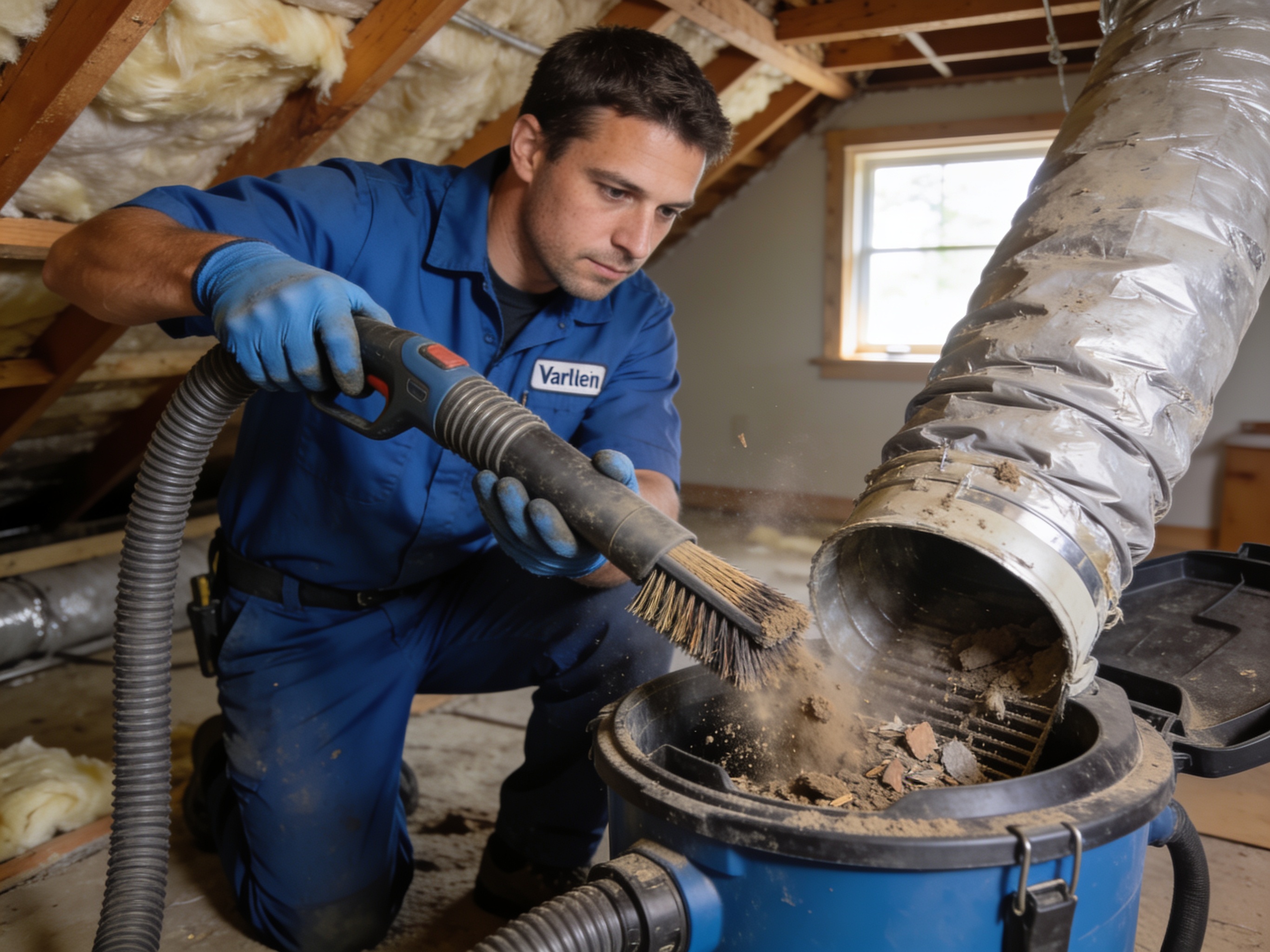
Tualatin's mild Pacific Northwest climate brings wet winters that drive moisture through crawlspaces and attics, encouraging mold and dust buildup inside ducts of homes built in the 1970s through 1990s around Tualatin Commons and Bridgeport. Older single-story ranch houses common in these neighborhoods often have flex duct runs that trap debris more readily than rigid metal, requiring longer vacuum times and brush agitation to clear without damaging seams. We schedule around the frequent rain so equipment stays dry and we avoid pulling excess moisture into the HVAC system.
Riverpark and nearby Lake Oswego properties sit on flatter terrain with higher water tables, which means basement and slab ducts collect fine silt during heavy winter storms. Technicians here routinely find pet hair and construction dust from nearby Tigard developments lodged in return plenums. Proper negative-pressure cleaning prevents that material from recirculating once the system restarts after a cleaning.
Washington County homes near the Tualatin River National Wildlife Refuge see extra pollen and outdoor debris pulled into intakes during spring and fall. We inspect for disconnected or crushed ducts first, a frequent issue in homes where additions were added without updating the original trunk lines. Addressing these before full cleaning keeps airflow balanced and prevents future hot or cold spots.
Juanita Pohl Center area residents often call after noticing musty odors from ducts that have not been accessed since the house was built. Our process includes sealing access points with mastic to match local code expectations and prevent future leaks in the damp climate.
Technician insight
In Tualatin, the thing that catches most people out with local air duct cleaning is how wet winters push moisture into crawlspaces under 1980s homes in Bridgeport and Riverpark, turning light dust into sticky buildup that standard brushes miss. Homeowners often skip the return plenum because it sits behind finished walls, yet that is where most of the pollen from the wildlife refuge settles. We always pull the blower wheel too, since one season of damp air leaves a film that cuts airflow more than the ducts themselves.
Bridgeport home with persistent musty smell
A single-story house near Bridgeport had odors that returned every winter. Inspection showed disconnected flex duct in the crawlspace pulling damp soil air into the system. We reconnected and sealed the run, then performed full negative-pressure cleaning. The homeowner reported the smell gone after the first dry weekend.
Local Air Duct Cleaning Services We Offer
✓Residential Air Duct Cleaning
Removes built-up dust, pollen, and pet dander from supply and return lines in single-family homes across Tualatin neighborhoods.
✓Commercial Air Duct Cleaning
Cleans larger trunk lines and rooftop unit ducts in offices and retail spaces near Tualatin Commons Park and Bridgeport Village.
✓Dryer Vent Cleaning
Clears lint from vent lines to reduce fire risk in homes with long horizontal runs common in Riverpark and older Downtown Tualatin properties.
✓HVAC Coil and Blower Cleaning
Targets evaporator coils and blower wheels to restore efficiency after wet winters allow moisture and dirt to collect in systems serving Lake Oswego and Tigard border homes.
✓Mold Remediation in Ducts
Applies EPA-registered treatments and removes growth triggered by high winter humidity in crawlspace-fed systems throughout Washington County.
Local Air Duct Cleaning Cost in Tualatin, OR
| Service | Typical Range | What Affects It |
|---|---|---|
| Single-story home under 2,000 sq ft | $350–$550 | Standard trunk and branch runs; higher if flex duct needs extra time |
| Two-story home 2,000–3,000 sq ft | $500–$750 | Additional time for upper-level returns and longer vertical lines |
| Dryer vent cleaning add-on | $150–$250 | Price rises with vent length and number of elbows |
| Mold treatment in ducts | $400–$700 | Includes antimicrobial application after source removal |
Ranges are typical for Tualatin, OR and confirmed with an exact written quote before any work starts.
How it works
- 1
Initial Inspection
We examine every accessible duct section, register, and the furnace or air handler to map the system layout and note any disconnected runs or moisture issues.
- 2
Negative Pressure Setup
A HEPA-filtered vacuum is attached to the main trunk while registers are sealed, creating directed airflow that pulls debris out without spreading it through the home.
- 3
Mechanical Agitation
Rotating brushes and compressed air tools dislodge material from flex and metal ducts common in Tualatin's 1970s-1990s housing stock.
- 4
Final System Check
We verify airflow at each register, confirm no residual debris remains, and reseal access points before restoring full operation.
Pricing
Cost depends on square footage, number of stories, and whether flex duct or moisture issues are present.