
Tualatin's mild Pacific Northwest winters bring frequent rain that raises indoor humidity in homes around Tualatin Commons and Bridgeport. This moisture travels through ductwork and creates conditions for mold growth on fiberglass liners and metal seams, especially in houses built before 1990 where insulation has settled. Emergency calls often come from residents who notice musty odors after a week of steady drizzle when the furnace kicks on.
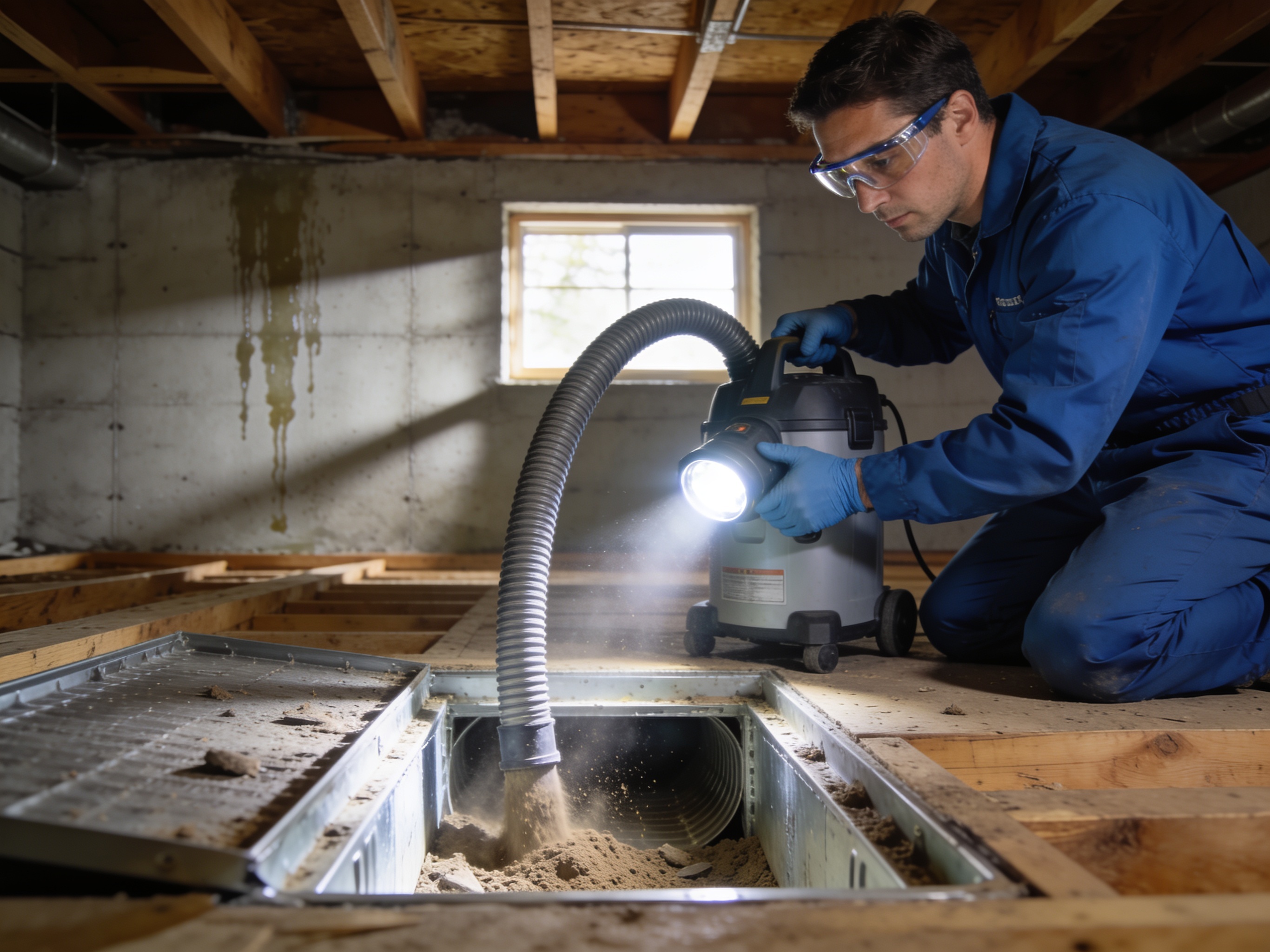
In Riverpark and Downtown Tualatin neighborhoods, many split-level homes have duct runs tucked under crawl spaces that sit close to the water table. When heavy rain saturates the soil, water can wick into flex duct connections and trap fine silt that restricts airflow. Technicians carry portable negative-air machines and moisture meters because standard shop vacuums cannot handle the combination of wet debris and tight 6-inch returns common in these layouts.
Washington County building codes require proper sealing after any duct disturbance, yet many older systems in Lake Oswego and Tigard still use outdated mastic that cracks under repeated wet-dry cycles. An emergency visit includes checking for disconnected joints near the Tualatin River National Wildlife Refuge area where pollen loads are high and can compound existing blockages.
Rapid response also means working around 24-hour schedules at the Juanita Pohl Center and nearby commercial buildings where after-hours access is limited. Crews stage equipment at the 8795 SW Tualatin Sherwood Rd shop so they can reach any Tualatin address within the hour when a homeowner reports sudden loss of heat or visible dust blowing from vents.
Technician insight
In Tualatin the thing that catches most people out with Emergency Air Duct Cleaning is how quickly wet winters push moisture into crawl-space ducts under 1980s homes in Bridgeport and Riverpark; once the soil stays saturated for more than a few days the flex connections start wicking water and standard shop-vac methods just smear the silt instead of removing it.
Collapsed duct under wet crawl space
A homeowner in Riverpark reported sudden weak airflow after three days of steady rain. Inspection showed a disconnected flex run sitting in standing water under the 1987 split-level. Crew isolated the section, extracted silt with a HEPA vacuum, reconnected and sealed the joint, then verified restored pressure at all registers.
Emergency Air Duct Cleaning Services We Offer
✓After-Hours Mold Containment in Ducts
Isolate and remove mold colonies triggered by wet winter air in Tualatin homes before spores spread through the HVAC system.
✓Flood-Related Debris Extraction
Clear silt and organic matter that enters duct runs during heavy rain events common along the Tualatin River corridor.
✓Emergency Airflow Restoration
Reconnect collapsed or disconnected ducts in crawl spaces of Bridgeport and Riverpark split-level homes to restore immediate heating.
✓Rapid Pollen and Allergen Flush
Flush high pollen loads from ducts near the Tualatin River National Wildlife Refuge during peak spring and fall seasons.
✓Nighttime Odor Source Removal
Locate and extract hidden sources of musty smells in older Tualatin Commons homes that only appear when the system runs continuously.
Emergency Air Duct Cleaning Cost in Tualatin, OR
| Service | Typical Range | What Affects It |
|---|---|---|
| Emergency residential duct cleaning | $450–$850 | Higher when crawl space access or heavy moisture is present in older Tualatin homes |
| Mold containment add-on | $200–$350 | Required when visible growth is found near the Tualatin River corridor |
| After-midnight service call | $150–$250 | Flat surcharge for calls between midnight and 6 a.m. |
Ranges are typical for Tualatin, OR and confirmed with an exact written quote before any work starts.
How it works
- 1
Immediate Phone Assessment
Gather details on symptoms, home age, and recent weather to determine equipment needs before dispatch from the Tualatin shop.
- 2
On-Site Containment Setup
Place negative-air machines and seal registers to prevent cross-contamination in living spaces of Tualatin neighborhoods.
- 3
Source Inspection and Moisture Check
Use cameras and meters to find wet insulation or debris in ducts near crawl spaces common in Washington County homes.
- 4
Targeted Extraction and Drying
Remove debris with HEPA vacuums and apply drying methods suited to the mild but persistently damp Tualatin winters.
- 5
Final Airflow Verification
Test static pressure and register output to confirm restored flow before leaving the property.
Pricing
Emergency rates reflect after-hours response and containment requirements; final price depends on access difficulty and moisture extent.