
2026-09-07 · Rick Morales
How Winter Heating Circulates Dust in Tualatin Homes
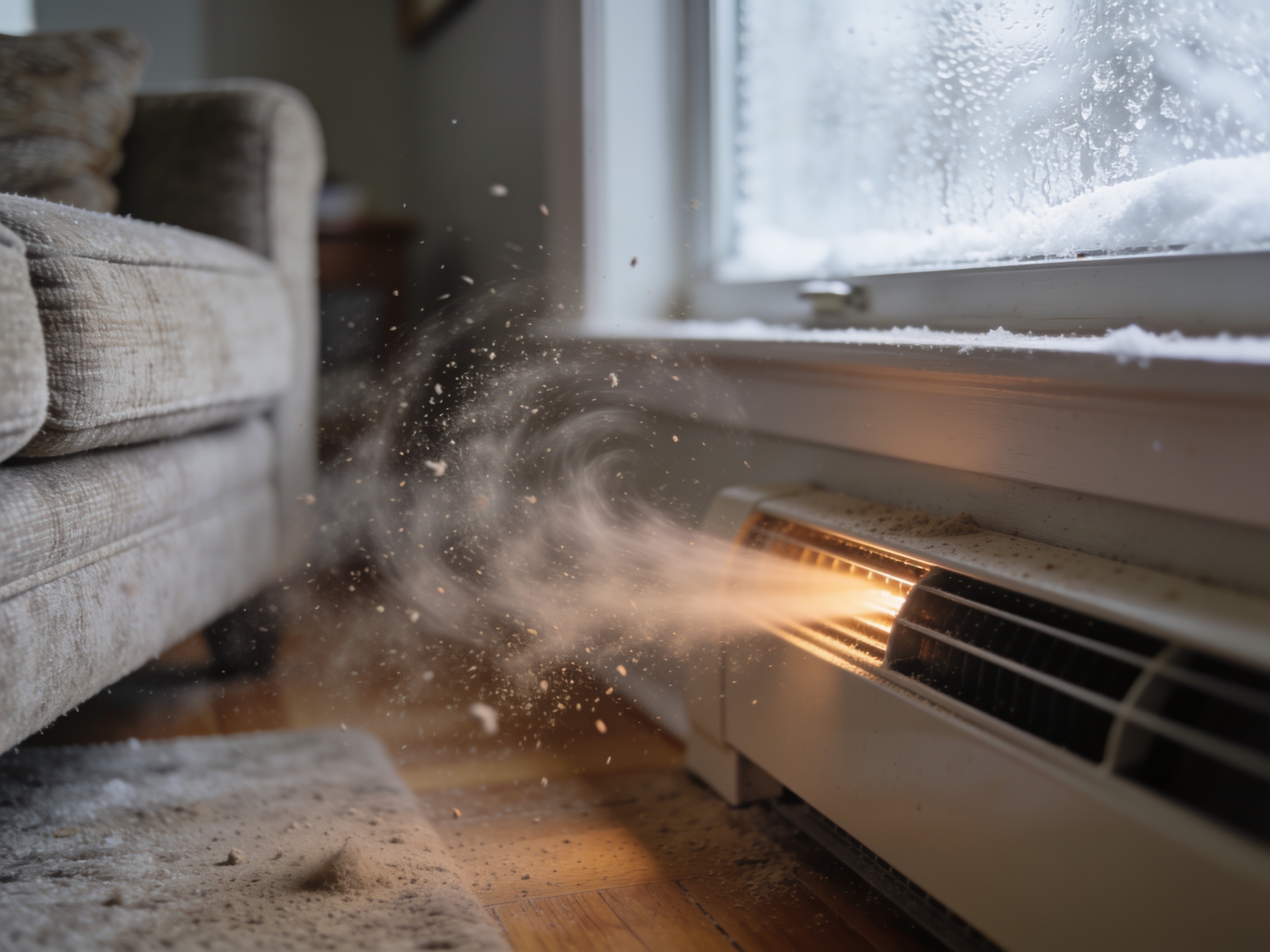
In Tualatin homes, winter heating systems circulate dust by pulling in particles from floors and ducts each time the furnace cycles on during the wet season, spreading them through vents in areas like Downtown Tualatin and Tualatin Commons. The mild Pacific Northwest climate keeps outdoor temperatures moderate but drives residents indoors once rains begin, sealing homes and increasing reliance on forced-air systems that stir settled debris. Homes near the Tualatin River National Wildlife Refuge often see more pollen and soil tracked inside, which heating then redistributes across rooms in Bridgeport and Riverpark developments.
Furnace Cycles and Dust Movement in Washington County Homes
Forced-air furnaces in Tualatin activate frequently once wet winters arrive, creating negative pressure that draws air from every room and returns it heated through the same ducts. This repeated cycling lifts fine particles from carpets, upholstery, and hard surfaces in older homes common to Downtown Tualatin and Lake Oswego borders. Because the region experiences prolonged damp periods rather than deep freezes, systems run longer cycles than in drier climates, allowing dust to travel farther before settling again. Residents in Tigard and nearby areas notice visible layers on furniture after several weeks of consistent heating. The process compounds in multi-story homes where return vents sit low, pulling floor-level debris upward and redistributing it to upper levels.
Local Housing Stock and Seasonal Dust Sources
Many homes in Tualatin's Bridgeport and Riverpark neighborhoods feature ductwork installed decades ago that collects lint, pet dander, and outdoor soil tracked in during wet months. Closed windows during the rainy season prevent natural ventilation, so heating systems become the primary air mover and concentrate particles in living areas around Tualatin Commons Park. The county's mix of single-family residences and townhomes built on varied terrain means some ducts run through crawl spaces where moisture encourages mold spores that get carried when heat turns on. Concrete slabs common in newer builds near Juanita Pohl Center trap less dust than older raised-floor homes, yet both types see increased circulation once indoor heating begins in earnest.
Practical Effects on Daily Air Quality
Homeowners in Tualatin often report increased sneezing and visible dust on surfaces within days of switching to heating mode because the system moves air that would otherwise remain still. In Washington County, where winters stay above freezing but stay wet, this creates a steady loop of redistribution rather than a single seasonal spike. Particles from nearby parks and the wildlife refuge settle on driveways and shoes, then enter homes and travel through vents to bedrooms and kitchens. The effect appears strongest in homes with carpeted main floors, where foot traffic loosens material that the furnace then captures and pushes elsewhere. Monitoring filter changes more often during these months reveals the volume of material the system handles each week.
Steps to Reduce Dust Circulation This Winter
Start by inspecting and replacing furnace filters every 30 to 45 days once heating begins in Tualatin. Next, schedule a full furnace and duct cleaning before the wet season peaks to remove built-up debris from the main trunk lines. Seal obvious gaps around return vents in homes near the Tualatin River National Wildlife Refuge to limit outdoor soil entry. Consider adding a whole-home air cleaner through indoor air quality services if family members notice ongoing respiratory irritation. Track how often dust reappears on surfaces after these steps to gauge whether further ductwork attention is needed. For cost considerations specific to Washington County homes, review what affects air duct cleaning costs in Washington County homes.